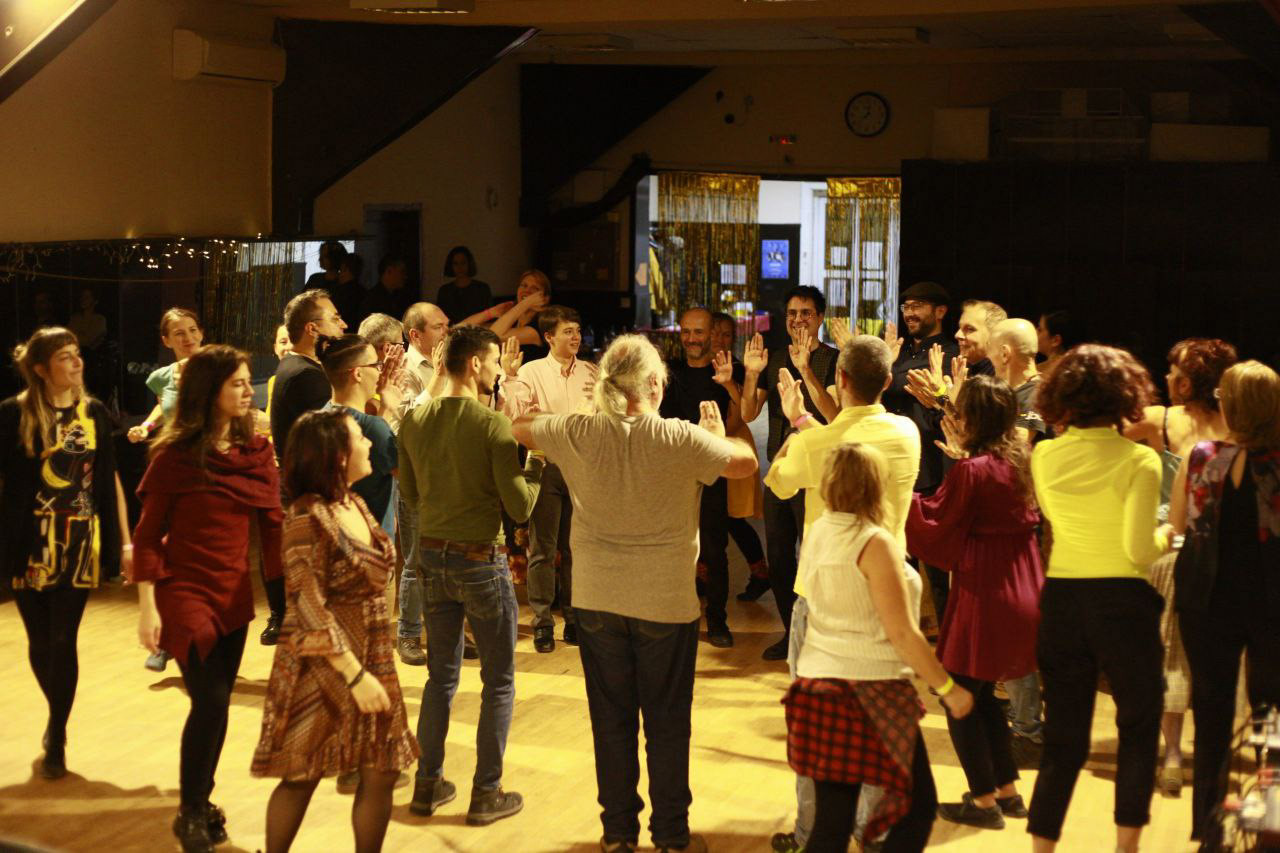
Balfolk (from the French bal folk, “folk ball”) is a participatory social dance movement that emerged in Western Europe in the late 20th century. It blends traditional village dances with a modern, inclusive approach to music and community.
2025 : Growth beyond Bulgaria
There were 52 events: 16 dance workshops, 14 music workshops (TUNE CIRCLE, BALFOLK'N'BALKAN) and 22 major events. These included Sofia (bal)Folk Weekend, the first Vitosha Balfolk Experience, and themed balls such as Bridgerton and Halloween. The year ended with Folk Marathon Sofia 25/26, the biggest event to date, supported by Sofia Municipality.
There were 52 events: 16 dance workshops, 14 music workshops (TUNE CIRCLE, BALFOLK'N'BALKAN) and 22 major events. These included Sofia (bal)Folk Weekend, the first Vitosha Balfolk Experience, and themed balls such as Bridgerton and Halloween. The year ended with Folk Marathon Sofia 25/26, the biggest event to date, supported by Sofia Municipality.
2024 : Growth beyond Sofia
Over 20 events took place in Sofia, Veliko Tarnovo, Plovdiv and Varna. Highlights were the 2nd ANNUALBAL: folk international, the "Balfolk Basics" workshop series, and guest artists such as Wallace Band, Pataghulhos, Smyrna Balfolk and Balfolkist. The association also appeared at the "I Am Sofia", "Kvartal" and "Wake Up" festivals, and held themed nights like Burns Night, St. Patrick's Day, Purim Tanzball, Venice Carnival and Samhain.
2023 : The founding year
Diana Todorova, Mario Zambrini and Velna Yancheva registered the association. It started regular dance and music workshops and its first themed balls, including a St. Patrick's Céilí. The first year was mainly about spreading the idea of balfolk and bringing people together. The team was also looking for venues to hold the balls and for partners to work with.
Diana Todorova, Mario Zambrini and Velna Yancheva registered the association. It started regular dance and music workshops and its first themed balls, including a St. Patrick's Céilí. The first year was mainly about spreading the idea of balfolk and bringing people together. The team was also looking for venues to hold the balls and for partners to work with.
2022: Regular Balfolk events in Bulgaria
Balfolk arrived in Bulgaria only recently, but it has grown rapidly. In 2022, Balfolkariya has been the driving force behind the movement, organizing workshops, concerts, international collaborations, and annual balls. Bulgarian dancers now learn and share dances from France, Belgium, Spain, Portugal, and beyond—while also introducing Bulgarian rhythms to European musicians. The scene is described as inclusive, intercultural, and community‑driven, connecting local and international artists and creating a new cultural bridge between Bulgaria and the wider European balfolk network.
2000s–Present: A European Network
From the 2000s onward, balfolk became a vibrant international movement, spreading across France, Belgium, the Netherlands, Italy, Germany, Spain, Portugal, and Poland. Events typically include:
Workshops for beginners and intermediates
Live music bals with diatonic accordion, hurdy‑gurdy, fiddle, bagpipes, guitar, and modern arrangements
Jam sessions where dancers and musicians share tunes together
Balfolk emphasizes accessibility, improvisation, and intergenerational participation—anyone can join, no partner or prior experience required.
From “bal folk” to “balfolk” (1970s–1990s)
By the 1970s, informal bal folk events were common in France—community dances with live traditional music. In the 1990s, a younger generation transformed the practice into a cross‑regional, traveler‑friendly scene, adding new compositions, standardized teaching, and international exchange. This period marks the shift from local village dances to a pan‑European social dance culture.
Origins (1950s–1970s): Folk Revival Roots
Balfolk grew out of the folk revival movements in France and neighboring countries. Mid‑century musicians and dancers began documenting and reviving regional dance repertoires such as bourrées, mazurkas, scottishes, gavottes, and Breton chain dances. These traditions, once tied to rural life, were re‑imagined for contemporary community gatherings.
Cultural Meaning
Balfolk is not a reenactment of historical folk dance; it is a living, evolving social culture. It blends tradition and innovation, creating a space where people from different countries share music, dance, and community. As dancers often say: the goal is not perfection, but connection.